Posts

Tracing America's Painful Past Can Offer Lessons for the Future

Image
On Saturday night, staff from the Robert R. McCormick Foundation will be attending the DuSable Museum of African American History’s “Night of 100 Stars,” a benefit highlighting the amazing achievements of notable individuals, including artist and musician Chancelor “Chance the Rapper” Bennett, former World Food Program executive director Ertharin Cousin, and Lonnie Bunch, the founding director of the National Museum of African American History and Culture in Washington D.C. and former president of the Chicago History Museum. Lonnie Bunch also had a piece in today’s New York Times about a recent incident at the National Museum in whcih someone placed a noose near one of the museum’s exhibits. This follows instances of nooses being left elsewhere on the National Mall in recent weeks, and in other places around the country as signs of racial hate and intimidation. Bunch offers a powerful view into the continuing story of racism and bigotry in this country, as well as our uneven progre...
Expanding Early Childhood Leadership in Illinois

Image
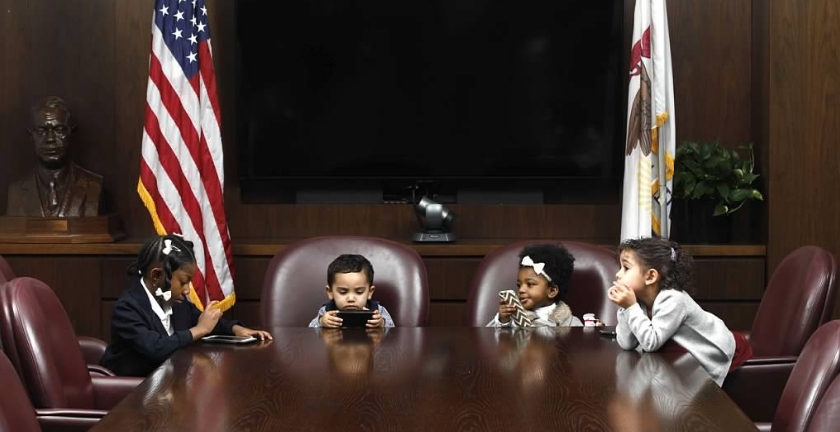
by Cornelia Grumman, Director, Education Program With support from the McCormick Foundation’s Education Program, the Erikson Institute in March launched a new track of its Early Childhood Leadership Academy. The McCormick Foundation Executive Fellows program trains high-level leaders across disciplines — including politics, government, law enforcement, education, the law — about key components of the early education system. Fellows will hear from experts on leading-edge research, visit exemplary early childhood settings, network with cross-sector leaders and receive on-demand online content. Equipped with this information, the executives can make better informed decisions about policies and resource allocation in their respective fields to advance outcomes for young children.

Securing Meaningful Careers for Chicago Veterans

Image
by Megan Everett, Director, Veterans Program There are a lot of misconceptions about veterans. PTSD or on the brink of committing suicide. Physically aggressive. Broken heroes. The list goes on and on. Veteran-stereotypes are just that, stereotypes. And like most stereotypes they are not true. The reality is most veterans are neither heroes nor broken, they are normal people looking to lead happy lives, have loving families, and obtain meaningful, successful careers. Sadly, this is not reality that most veterans face when returning from service. According to a recent survey issued by the University of Southern California and Loyal University of Chicago, Chicago veterans are unprepared for the shift from military to civilian workforce, and, consequently struggle during the transition process. The study also showed about half of post-9/11 veterans, returning to Chicago, will experience a period of unemployment. Here’s the thing — veterans ARE trained leaders for whom account...

Home of the Brave

Image
by Brad Lash, Web Content Strategist Land of the Free. Home of the Brave. Melting Pot. Land of Opportunity. With slogans like these, it comes as no surprise that people across the world are attracted to move to the United States. Our national rhetoric promises inclusion and equitable access to “The American Dream”, however the hardship and prejudice that today’s immigrants face when they arrive tell a different story. I recently had the opportunity to visit Pui Tak , a grantee of the McCormick Foundation’s Communities Program . Pui Tak hosts English classes for adult students from East and Southeast Asia. I listened as immigrants from countries such as China, Japan, Thailand and Malaysia shared their stories. A strong common theme was their desire to create a better life for themselves and their families, whether they were in their twenties or seventies. Many of them work hard in low-paying laborious jobs. People make fun of their accents or tell them to go back where they came fr...

Electing President Lincoln

Image
by Jeff Anderson, McCormick Museum Tour Coordinator This summer, the Robert R. McCormick Museum at Cantigny Park in Wheaton, Illinois, obtained a painting by Chicago Tribune artist James Sessions. The painting depicts a meeting between Abraham Lincoln and Chicago Tribune editors, Joseph Medill and Dr. Charles Ray. Lincoln was seeking advice regarding a speech that he would be giving in New York the following year. This speech was famously known as the Cooper Union speech, which was considered to be one of his most important speeches of his career. Some historians argued that it was this speech that was responsible for his victory in the presidential election later that year. Joseph Medill and Charles Ray were fierce advocates of Lincoln. Their allegiance was formed during the senate race against Senator Stephen Douglas. During that election the Chicago Tribune published several articles and editorials praising Lincoln. On February 28, 1860, Lincoln delivered the Cooper Union spe...

Veteran Faces

Image
by Megan Everett, Veterans Program Director The Robert R. McCormick Foundation recently granted nearly $1.2 million to eight nonprofits supporting veteran services, reintegration and public health initiatives in Illinois. To help promote the important work of these organizations, we are sharing short vignettes that capture how these organizations are impacting local veterans. Since September, we have had the privilege to speak with four incredible individuals on how our partner organizations such as, National Able Network , Bunker Labs , Chicago Lighthouse , and Thresholds  have helped them transition back into civilian life. The stories below reveal hardships, successes, and self-reflections faced by these veterans upon leaving the military. To view the full interviews follow @McCormick_Fdn on Twitter and Like the McCormick Foundation on Facebook . Deneen Gayles, National Able Network I am a National Guard veteran. I retired in 2014 after serving in the military for ne...

Program Helps Close Summer Learning Gap

Image
by Liz McChesney, Director of Children and Family Services, Chicago Public Library According to the National Summer Learning Association, every summer, low-income youth lose two to three months in reading while their higher-income peers make slight gains. Most youth lose about two months of math skills in the summer. This phenomenon contributes to gaps in achievement throughout the child’s life effecting future employment, and college and career success. To help reverse this discouraging trend in Chicago, Chicago Public Library (CPL), launched a 10-week summer learning program, Rahm’s Readers Summer Learning Challenge. This initiative provides opportunities for youth throughout Chicago to grow and learn while out of schools, including STEAM (Science, Technology, Engineering, Art and Math) programs developed in partnership with the Museum of Science and Industry. Youth who enrolled in the Summer Learning Challenge–particularly the youngest and most engaged—showed 15 percent great...